


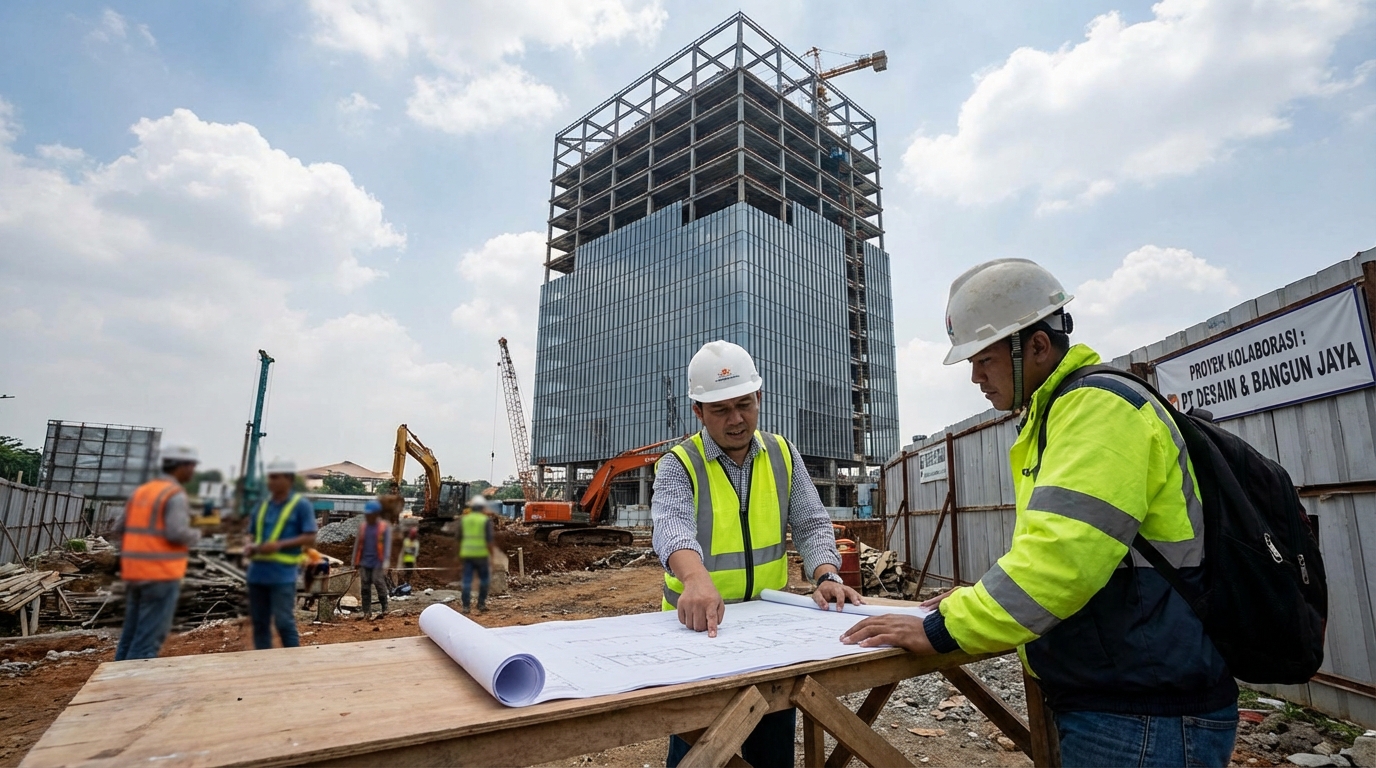
Every second interior design firm in Jakarta calls itself "design and build." The phrase is on their website, their business cards, their Instagram bio. But when you dig into what they actually deliver, the definition stretches. Some firms genuinely handle both design and construction under one roof. Others slap the label on what is really a design studio that subcontracts all construction to whoever quotes cheapest.
The difference matters more than most business owners realize. It changes who is accountable when things go wrong, how much control you have over costs, and whether your finished space matches what was promised.
What Design and Build Actually Means
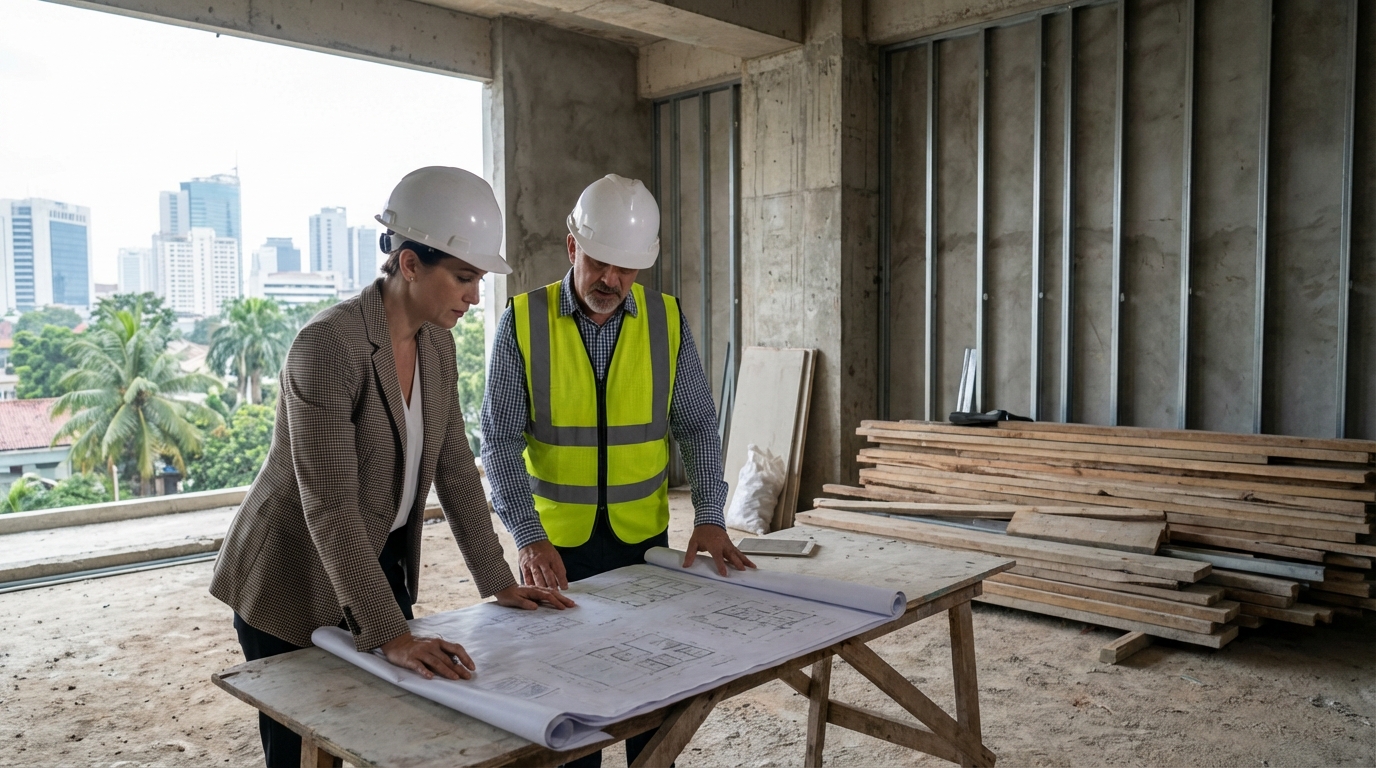
In its real form, design and build means one company handles everything from initial concept to final handover. They employ the designers who create your floor plans and 3D renders. They also employ — or directly manage — the project managers, site supervisors, and construction crews who build it.
One contract. One team. One party responsible for the outcome.
This is different from the traditional approach, often called design-bid-build, where you hire a designer separately, get construction drawings, then send those drawings out to contractors for bidding. You pick a contractor, sign a second contract, and hope the two parties communicate well enough to deliver what was designed.
The design and build model eliminates that gap. Because the same firm designs and builds, the designers already know what materials are available, what the construction crew can execute, and what fits within budget. They are not designing in a vacuum and handing off a fantasy to someone else to figure out.
Why the Traditional Model Creates Problems
The Blame Game
When design and construction are separate contracts, problems have no clear owner. The floor tiles crack — is that the designer's fault for specifying the wrong grade, or the contractor's fault for poor installation? The built-in shelving doesn't match the render — did the designer draw it wrong, or did the contractor cut corners?
With separate parties, each one points at the other. You are stuck in the middle, playing mediator between two companies who have no contractual relationship with each other. In Jakarta, where office renovations already go wrong for a dozen other reasons, adding a communication gap between designer and builder is an unnecessary risk.
Cost Surprises
A designer working independently has little incentive to check whether their beautiful concept fits your budget. They design what looks good. You fall in love with the render. Then the construction quotes come back 40-60% over budget, and you are back to square one.
In a real design and build firm, the designer checks material costs during the design phase — not after. They talk to procurement while drawing. By the time you see a proposal, they already know it can be built within your numbers.
Wondering what a realistic budget looks like for your space? Get a straight answer based on your actual requirements.
How Firms Use the Term Loosely
Here is where it gets messy. Many firms in Jakarta market themselves as design and build but operate in one of these ways:
The Subcontractor Model
The firm has an in-house design team but no construction capability. When you sign the contract, they outsource construction to a third-party contractor. Sometimes they manage the contractor well. Sometimes they barely supervise.
The problem is accountability. If the contractor does poor work, the firm might blame the contractor. If costs overrun, the firm might say the contractor's pricing changed. You thought you were getting single-point responsibility, but you actually have the same fragmented setup as design-bid-build — just with one invoice instead of two.
The Broker Model
Even further removed. The firm acts as a middleman — they produce some design concepts, then find a contractor willing to build it. Their involvement during construction is minimal. They show up for a few site visits, take progress photos, and forward your complaints to the contractor.
This is design-bid-build wearing a design and build label.
The "We Do Everything" Claim
Some firms genuinely employ designers and have a construction team, but the team is too small for the volume of projects they take on. They stretch across five or six projects simultaneously, with one site supervisor covering three sites. The single-point accountability exists on paper, but in practice, nobody is actually watching your project closely enough to catch problems before they become expensive.
How to Tell If a Firm Is Really Design and Build
Ask direct questions. The answers reveal the model quickly.
"Who manages construction on site?" If the answer is a subcontractor's foreman, the firm is outsourcing construction. A real design and build firm has their own project managers and site supervisors.
"Do your designers consult with procurement during the design phase?" If design and costing happen in separate stages, the firm is not truly integrated. In a real design and build setup, the designer knows the cost of what they are drawing before they present it to you.
"What happens if construction costs exceed the quoted amount?" A firm with real construction capability absorbs that risk or manages it through transparent variation orders. A firm that subcontracts will pass the overrun to you because they cannot control the contractor's pricing.
"Can I visit a current construction site?" A firm that builds will have active sites. A firm that brokers construction will hesitate or redirect you to completed projects only.
Design Build vs Design Bid Build: When Each Makes Sense
Design and build is not always the right choice. If you already have an architect you trust and want maximum control over contractor selection, design-bid-build gives you that. You can pit contractors against each other on price using identical drawings, which sometimes produces lower construction costs.
But for most commercial interior projects in Jakarta — offices, retail spaces, restaurants, clinics — design and build is the more practical model. These projects move fast, have tight deadlines, and need the designer and builder talking to each other daily. The questions you ask before signing should include verifying which model you are actually getting.
The key is knowing what you are buying. A firm that calls itself design and build should be able to prove it. Ask for the proof. If they cannot show you an integrated team, active construction sites, and a track record of delivering from concept to handover under one contract, you are not getting design and build. You are getting a label.
Looking for a design and build firm that actually does both? Let us walk you through how we work — from concept to handover.