


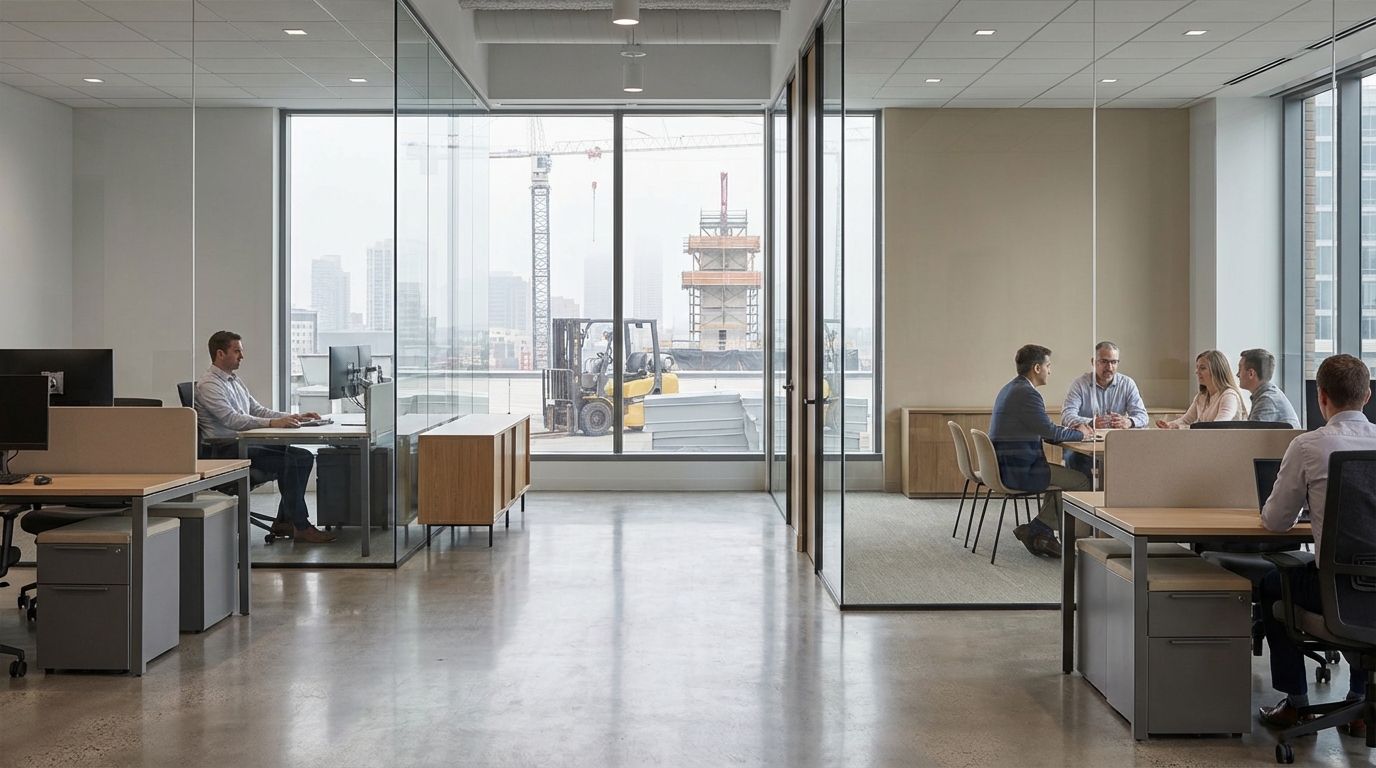
You have a commercial fit-out coming up. Maybe an office, maybe a retail space. You've started talking to firms, and you've noticed they fall into two camps. Some are pure designers who hand off construction to a separate contractor. Others do both — design and build under one roof.
Both approaches work. But they work differently, and the wrong choice for your situation creates problems that show up months into the project. Here's how to think through it.
How the Two Models Actually Work
Separate Designer and Contractor (Design-Bid-Build)
You hire an interior designer or design consultant first. They produce the concept, floor plans, material specifications, and construction drawings. Once the design is finalized, you take those drawings and send them out to two or three contractors for competitive bids. You pick a contractor, sign a separate contract, and construction begins.
The designer may stay involved during construction as a supervisor — checking that the contractor follows the drawings — but they're not managing the build. They're an extra set of eyes, not the person making daily site decisions.
Design & Build (Single Entity)
One firm handles everything from concept design through construction and handover. The same team that draws the floor plan also sources the materials, manages the contractors, and delivers the finished space. There's one contract, one point of contact, and one party responsible for the outcome.
Cost: Where the Money Actually Goes
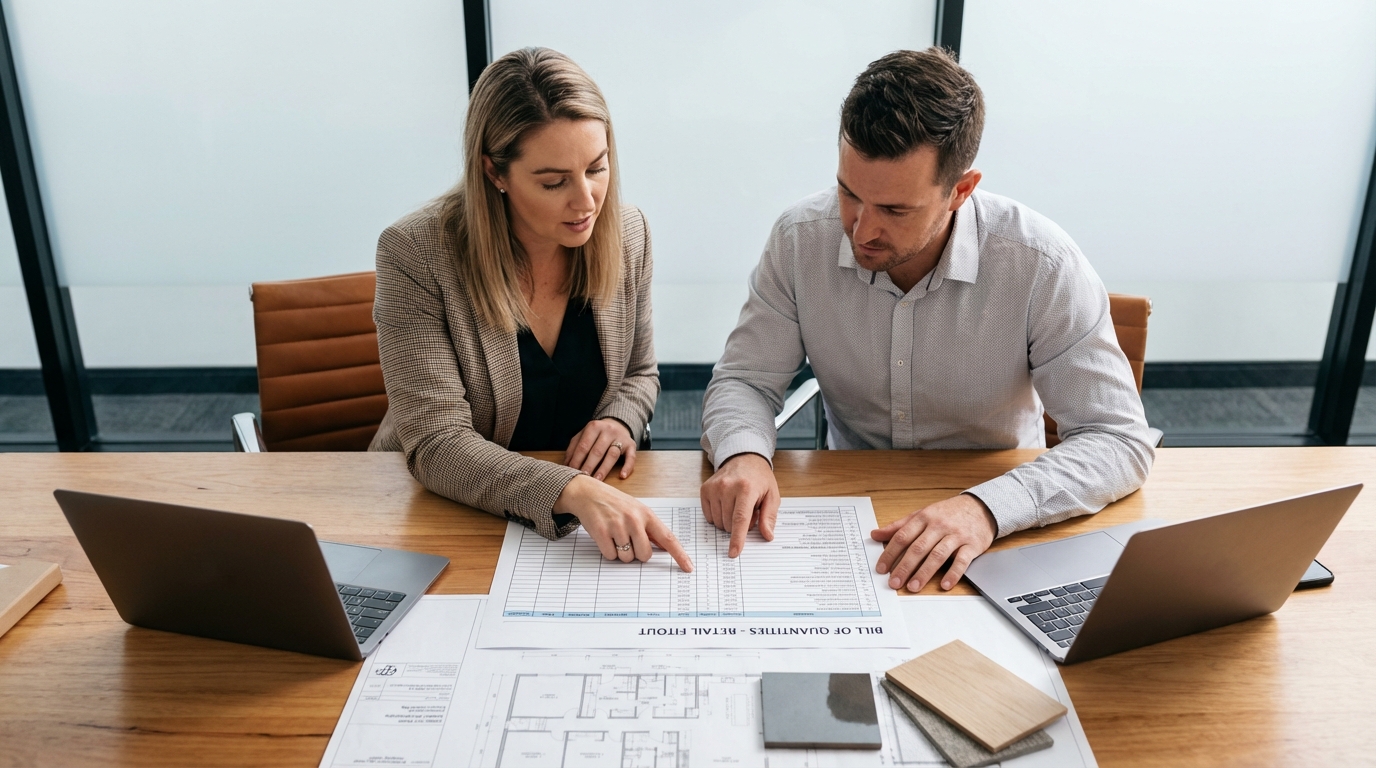
With the separate model, you typically pay the designer 8-15% of construction cost as a design fee, then pay the contractor separately. The upside is competitive bidding — you can shop the drawings around and get the best price. The downside is that the cheapest bid often wins, and the cheapest quote is usually the most expensive once change orders start piling up.
Design & build firms roll design and construction into one price. You lose competitive bidding, but you gain cost certainty earlier. A good design & build firm checks material costs during the design phase — their designers talk to procurement as they draw, so by the time you see a proposal, they already know it's buildable within your budget. No surprises at bid time.
The hidden cost difference: in the separate model, the designer often doesn't consult procurement while designing. They create something beautiful, you fall in love with it, and then the contractor quotes come back 40% over budget. Now you're redesigning, which costs more time and often more design fees.
Thinking about costs for your next fit-out? Let's talk through the numbers for your specific project.
Accountability: Who's Responsible When Things Go Wrong
This is the biggest practical difference between the two models, and it's the one most business owners underestimate.
With separate teams, problems during construction trigger a blame game. The contractor says the drawings were wrong. The designer says the contractor didn't follow them. You're stuck in the middle trying to figure out who's right — and you're not a construction expert. When MEP coordination fails and the gypsum ceiling gets cut open two weeks after installation, who pays? When the imported tiles arrive in the wrong shade, is that the designer's specification error or the contractor's sourcing mistake?
With design & build, there's one throat to choke. If the design can't be built within budget, that's the firm's problem — they designed it and they're building it. If there's a coordination failure between electrical and partition work, it's the same team on both sides. Accountability is clear because there's no one else to point at.
This matters most on projects with tight timelines. When your lease starts and every week of delay costs rent on an empty space, you can't afford two parties arguing about whose fault it is.
Timeline: How Fast You Actually Get In
With design-bid-build, the process is sequential. Design phase finishes. Then you go to bid. Bidding takes 2-4 weeks. Then contractor selection, contract negotiation, and mobilization. Only then does construction start. Total timeline from concept to move-in can run 6-8 months for a mid-size office.
Design & build compresses this. The firm can start preliminary construction planning while design is still being finalized. Material procurement can happen in parallel with drawing approvals. The same team coordinates everything, so there's no handoff delay between design and build. Typical timeline savings are 15-25% — which on a six-month project means moving in 4-6 weeks earlier.
For businesses on a fiscal year schedule or racing a lease start date, those weeks matter.
Quality Control: Who Watches the Work
The Separate Model's Advantage
The strongest argument for hiring a separate designer is independent oversight. Your designer acts as your representative on site, checking that the contractor follows specifications. If the contractor cuts corners on materials — using standard MDF where moisture-resistant was specified, or thinner electrical cables than the drawings call for — your designer catches it.
This only works if the designer actually does site supervision. Many design contracts don't include it, or include only a few visits. And even when it's included, the designer often lacks the construction knowledge to catch technical shortcuts. They can tell if the paint color is wrong, but can they tell if the cable gauge is underrated?
The Design & Build Reality
Design & build firms don't have that independent check. The same company that profits from the construction is also responsible for quality. That's a valid concern.
Good design & build firms address this with structured processes: standardized bills of quantities where every material is specified by brand and grade, variation orders signed before any changes, as-built drawings delivered at handover, and a retention period (typically 3-5 months) where a percentage of payment is held as defect insurance.
The key question isn't which model has better quality control in theory. It's whether the specific firm you're hiring has systems that prevent shortcuts — regardless of the model.
When Each Model Makes More Sense
Go Separate When:
- You have a unique design vision and want a specific designer whose style matches your brand — but they don't do construction
- You want competitive pricing and have the time and expertise to manage a bidding process properly
- Your project is large enough (over 500 sqm) that the cost savings from competitive bidding outweigh the coordination overhead
- You have an experienced project manager on your team who can mediate between designer and contractor
Go Design & Build When:
- Timeline is tight and you can't afford a sequential design-then-bid-then-build process
- You don't have internal construction expertise and need one party to be fully accountable
- Your budget needs to be locked early — you can't risk designing something that comes back over budget at bid time
- You're doing a straightforward commercial fit-out (office, retail, F&B) where proven systems matter more than avant-garde design
- You've been through a renovation that went wrong because of coordination failures between designer and contractor
The Questions That Actually Matter
The model matters less than the firm. A great design & build firm will outperform a mediocre designer paired with a cheap contractor every time. And a brilliant independent designer paired with a solid contractor can produce work that no design & build firm would match.
Before you decide on a model, ask the right questions. How does the firm handle budget overruns? Who manages the project day-to-day? What happens when something goes wrong on site? What's included in the price and what isn't?
If a firm — whether design-only, contractor-only, or design & build — can't answer those questions with specifics, the model doesn't matter. You're hiring the wrong people.
Ready to discuss your project? Whether you need design, build, or both — we'll help you figure out the right approach.