


You've got two or three proposals on your desk. The layouts look reasonable. The prices are close enough. So you compare the bottom-line numbers and pick the cheapest one.
Six months later, the floors are scratching, the paint is yellowing, and you're discovering that half the things you assumed were included... weren't.
The problem isn't that contractors are out to cheat you. Most firms are competent. The problem is that proposals are designed to look complete, and unless you know what to look for, it's hard to tell which ones actually are. Here are seven red flags that should make you stop and ask questions before signing.
1. Vague Material Specifications
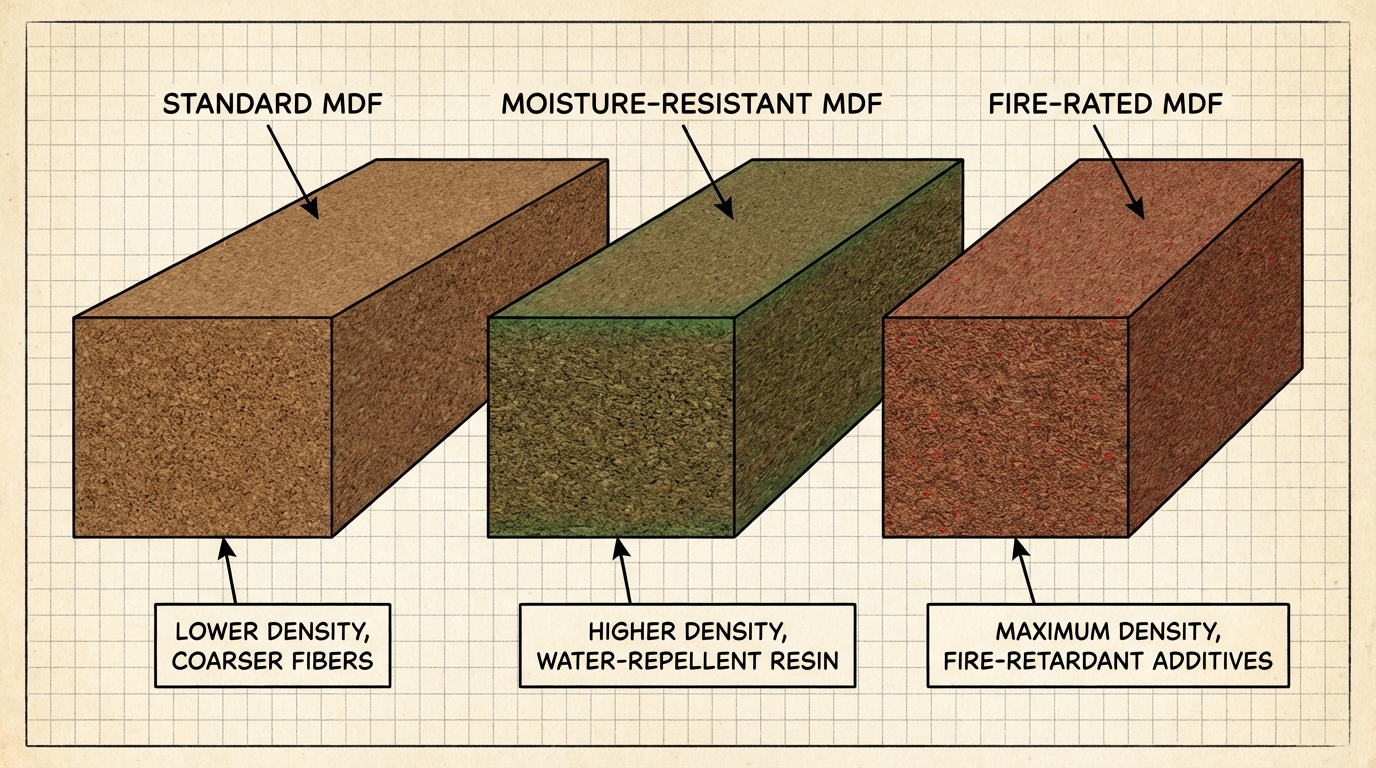
This is the single biggest place where cost-cutting hides. A proposal that says "MDF partitions" or "vinyl flooring" or "60x60 tiles" without specifying the grade, brand, or rating is giving you no real information.
Take MDF alone. It comes in standard, moisture-resistant (MR), and fire-rated (FR) grades. Standard MDF costs significantly less than MR-grade — but if it's going near a pantry or bathroom, standard MDF will swell and warp within a year. The proposal says "MDF." You assume it's the right kind. It isn't.
The same game plays out across every material:
- Plywood: Marine-grade plywood and commercial-grade plywood look identical in a line item. One lasts decades in humid conditions, the other delaminates.
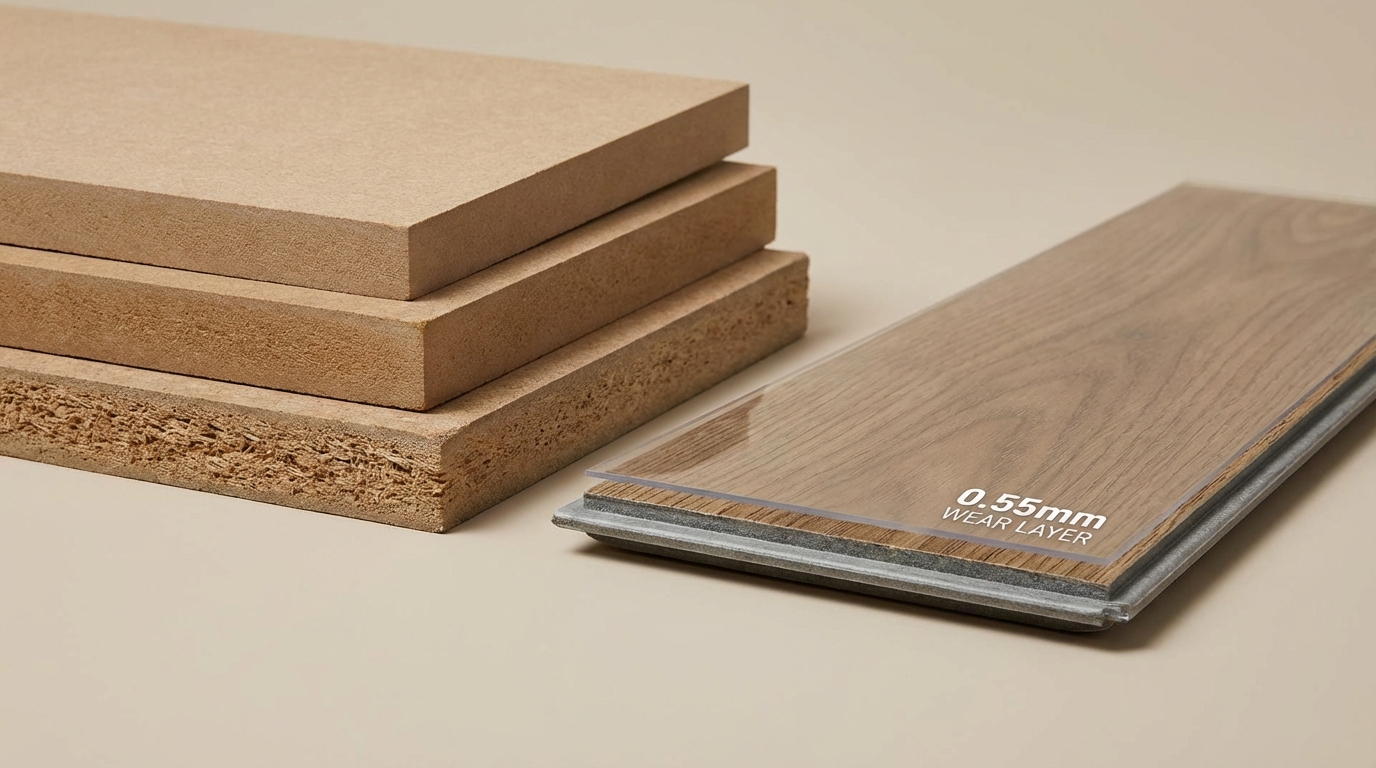
- Vinyl flooring: A 0.3mm wear layer (residential grade) and a 0.55mm wear layer (commercial grade) are both "vinyl plank flooring." The price difference is 40-60%. The lifespan difference is years.
- Paint: "Painting — 2 coats" might mean two coats without primer. Or primer plus one coat. Or two coats of the cheapest economy line instead of a commercial-grade product. On day one, they all look the same.
- Ceiling boards: Standard gypsum and moisture-resistant gypsum are both "gypsum ceiling." Put standard board above a kitchen and watch it sag from steam within two years.
- Electrical cables: A quote might say "wiring for 20 outlets" but use cables rated for fewer — thinner gauge, cheaper insulation. Saves the contractor money. Creates a fire hazard when you actually plug things in.
The red flag: Any line item that names a material without specifying its grade, thickness, brand, or rating. "18mm MR-grade MDF" tells you something. "MDF" tells you nothing.
What to do: Go through the proposal line by line. Every material should have at least a grade and a specification. If it doesn't, ask: "What exact grade are you pricing here?"
2. Electrical and Data Points Buried in a Lump Sum
Your proposal says "electrical works — Rp 85,000,000." That number looks reasonable. But how many power points does it include? How many data points? What about dedicated circuits for server rooms or heavy kitchen equipment?
A typical office workstation needs 2-3 power outlets and 1-2 data points. A 40-person office needs 80-120 power points and 40-80 data points just for workstations — before you count printers, pantry equipment, AV systems, and building services.
When the proposal doesn't specify quantities, you can't compare quotes. One firm might be pricing 100 power points. Another is pricing 200. The lump sums look similar because the second firm is using cheaper components.
Worse, some proposals quote "light points" that don't include the actual bulb or connector. You're paying for wiring to a spot on the ceiling. The light fixture is extra. The LED panel is extra. The connector is extra. You find this out after you've signed.
The red flag: Any electrical scope presented as a single lump sum without a schedule of quantities.
What to do: Ask for a breakdown: how many power points, data points, light points, and dedicated circuits. Ask explicitly whether "light point" includes the fixture, bulb, and connector — or just the wiring.
3. Unclear Warranty and Defect Liability Terms
Most proposals mention a warranty somewhere. Few spell out what it actually covers.
There are two separate things here. The defect liability period (DLP) is the window after handover where the contractor fixes defects in their own work — paint cracking, doors that don't close, loose fixtures. For commercial interiors, this typically runs 3-12 months.
Product warranties are different. These are manufacturer warranties on items like chairs, AC units, and lighting fixtures, passed through by the contractor. They can range from 1 to 10+ years.
The gap that catches clients: your contractor offers a 6-month DLP. A cabinet hinge fails in month 8. Is that a workmanship issue (outside DLP) or a product defect (within manufacturer warranty)? If the proposal doesn't distinguish between these two categories, you'll spend months arguing about who's responsible for what.
The red flag: A proposal that mentions "warranty" without specifying DLP duration, what it covers, what's excluded, and how product warranties are handled separately.
What to do: Ask for the DLP duration in writing. Ask whether you'll receive copies of all product warranties at handover. Ask what the process is for reporting defects — because a 12-month DLP means nothing if there's no mechanism to actually get things fixed.
4. Silent Exclusions — What's NOT in the Proposal
This is the one that inflates your final bill by 20-30%. Not what's in the proposal — what's missing from it.
Common items that get silently excluded:
- Hacking and demolition of existing structures
- Waste disposal — removing construction debris from site
- Building management fees — many commercial buildings charge fees for contractor access, loading dock use, and after-hours work permits
- Hoarding and temporary partitions — required in occupied buildings to contain dust and noise
- Touch-up and repair of adjacent areas affected by construction
- "Supply and install" vs "installation only" — a line item might say "bathroom sink installation — Rp 1,000,000" but that's the labour only. The sink itself, the marble surround, the plumbing connectors — all separate. You discover this after signing.
These items appear later as "variation orders" or "additional works." Each one is individually reasonable. Together, they can add 20-30% to your project cost.
The red flag: A proposal that looks suspiciously complete at a competitive price. The more comprehensive a proposal looks without explicitly listing exclusions, the more likely things are being silently left out.
What to do: Paste your proposal into ChatGPT and ask it to identify what might be missing. Seriously. AI is very good at comparing a proposal against a standard scope checklist. Then go back to the contractor and ask about each missing item. A good firm will appreciate the thoroughness. A firm that was relying on silent exclusions will be less enthusiastic.
5. Space Plans That Only Work on Paper
The 3D renders look stunning. The floor plan is clean and symmetrical. Everything fits perfectly in the drawing.
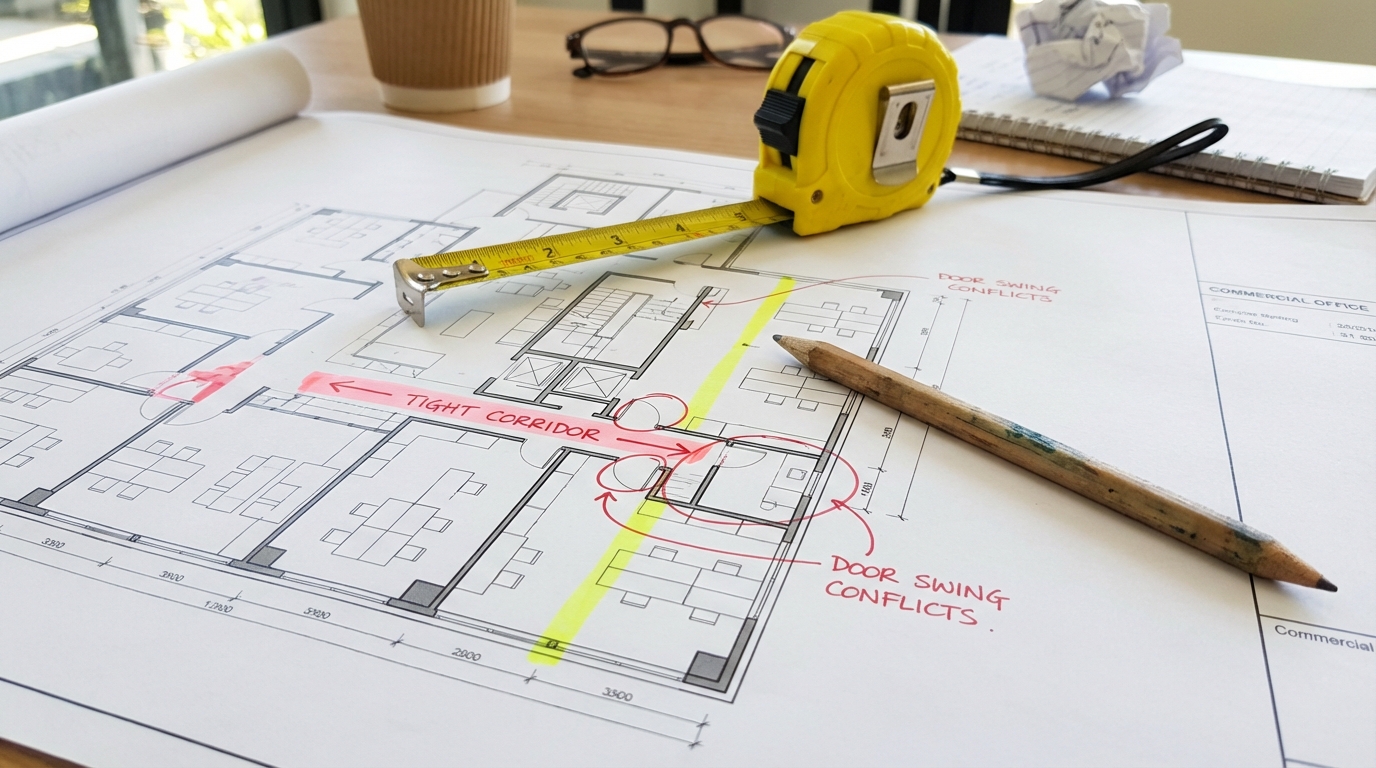
Then you build it, and the bathroom door can't fully open because it hits the sink. The corridor between desk rows is technically 80cm — wide enough on paper, impossibly tight when someone's sitting in a chair and another person needs to walk past. The storage room door opens into the hallway and blocks the fire exit. The reception desk faces a wall because the designer optimized the render for one camera angle.
Bad space planning is one of the hardest red flags to spot because the drawings look professional. You need to mentally walk through the space. Open every door in your head. Sit in every chair. Push a trolley through every corridor. Think about what happens when 40 people are actually using this space at the same time.
Real examples: a restaurant where the chair height, table height, and cushion softness were never tested together — customers eat uncomfortably and never come back. A retail store where a monumental display blocks the CCTV camera angles — security is blind to half the shop floor. A Salomon store where a display fixture sits at head height right at the entrance — customers walk in and hit their heads, and the store has to put up warning signs.
The red flag: Beautiful renders with no evidence that anyone checked functional clearances, door swings, traffic flow, or operational requirements.
What to do: Ask the designer to walk you through the floor plan operationally. Not aesthetically — operationally. Where does the cleaning trolley go? Can the bathroom door open fully? Where do staff store their bags? If they can't answer confidently, the plan hasn't been thought through.
6. Trendy Materials That Don't Survive Indonesian Climate
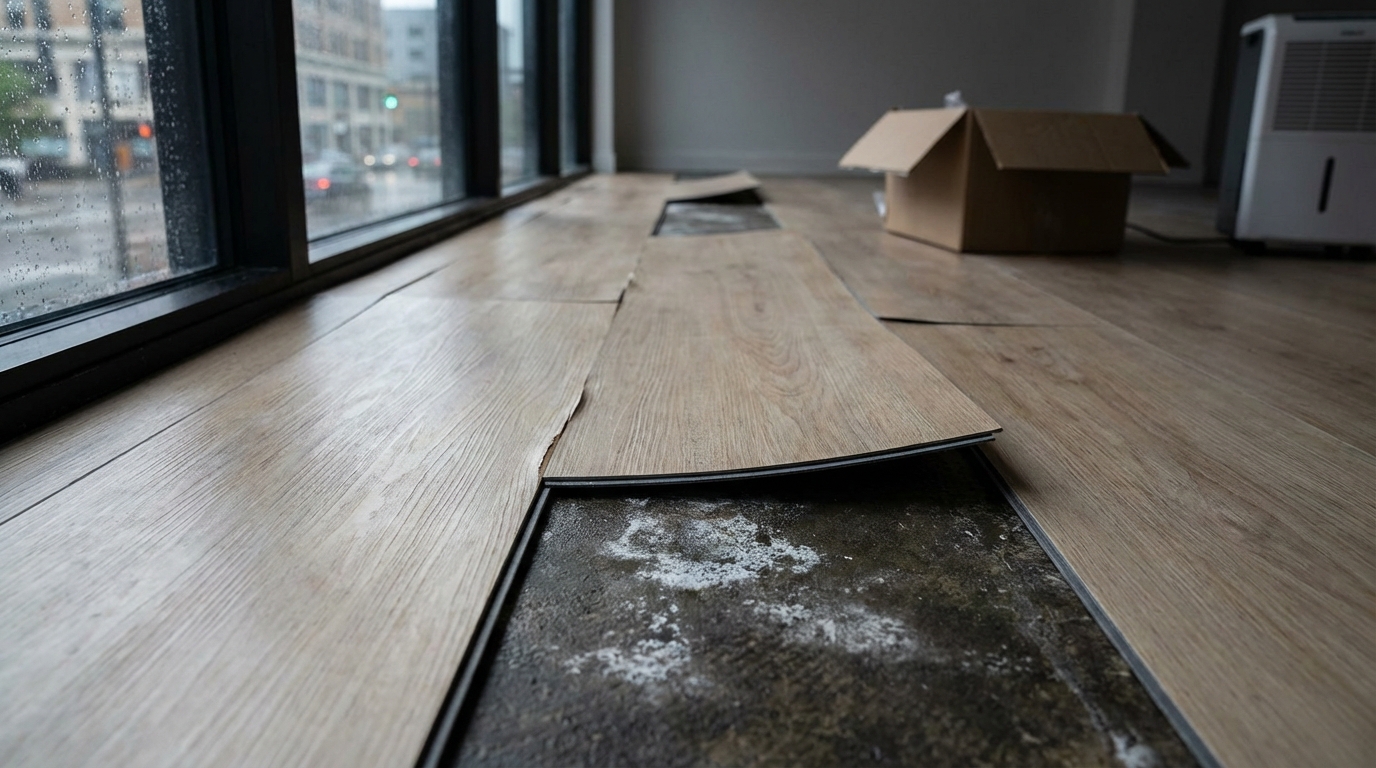
Indonesia's tropical humidity destroys materials that work perfectly in temperate countries. A designer who follows international trends without adapting to local conditions is setting your project up for premature failure.
SPC flooring is a current example. It became wildly popular — herringbone patterns, stone-like durability, easy installation. The problem: SPC flooring has a foam underlayer that doesn't handle Indonesian humidity. Within months, the planks warp, curl, and detach. A floor that looks like a European showroom in January looks like a warped mess by June.
The same applies to European-style timber facades. They photograph beautifully and last decades in Amsterdam. In Jakarta, the wood rots and grows fungus within months. Tropical humidity is relentless, and no amount of coating fully compensates.
Other examples: certain wallpaper adhesives that fail in high humidity, paint products formulated for temperate climates that yellow faster in tropical UV, and acoustic panels that absorb moisture and develop mould in un-air-conditioned corridors.
The red flag: A proposal that specifies materials popular on Pinterest or international design blogs without any mention of how they perform in tropical conditions. Extra caution if the designer's portfolio is mostly from a different climate zone.
What to do: For every featured material, ask: "Has this been used in Jakarta before? How does it handle humidity?" If the answer involves the words "should be fine" rather than citing a specific past project, be skeptical.
7. A Quote That's Dramatically Cheaper Than Everyone Else
You get three quotes. Two are in the range of Rp 6-7 million per square meter. The third comes in at Rp 3 million. Same scope, same floor plan. You're tempted.
There are only a few possible explanations for a quote that's 2-3x cheaper than the competition:
- They're using significantly cheaper materials — but the proposal doesn't specify grades, so you can't tell. (See Red Flag #1.)
- They've silently excluded major scope items — demolition, waste disposal, building management fees. (See Red Flag #4.)
- They're planning to cut corners during construction — thinner cables, fewer coats of paint, cheaper fasteners. Things you'll never see inside the walls.
- They'll lowball to win the contract, then recover margin through variation orders. Every change, every "additional" item, every clarification becomes a billable extra.
- They're desperate for work and pricing below cost, which often means they run out of money mid-project and either cut quality or disappear entirely.
The one legitimate exception: if you're a large company with a recognizable brand, some firms will price aggressively because having your logo in their portfolio is worth more than the project margin. A bank, a well-known F&B chain, an international brand — these sometimes get genuinely subsidized pricing. But this is the exception, and if you're reading this article, it probably doesn't apply to your situation.
The red flag: Any quote that's dramatically below the others without a clear, specific explanation of why.
What to do: Don't reject it outright. Instead, drill in. Ask them to walk you through their material specifications line by line. Ask what's excluded. Ask what their cable gauges are. Ask about paint brands and number of coats. The answers will quickly reveal whether the low price reflects genuine efficiency or hidden compromises. If they can't explain why they're cheaper, they probably can't deliver at that price either.
Got a proposal on your desk and not sure what to make of it? Our team reviews commercial interior proposals daily and can point out what to look for. Send it over on WhatsApp — no obligation, just a second pair of eyes.
Before You Sign
A proposal with red flags isn't necessarily a bad proposal. It might just be incomplete, or from a firm that expects to sort out details during design development.
But a proposal that clearly specifies materials, quantities, exclusions, warranty terms, and operational considerations is telling you something important: this firm has done the thinking. They've matched materials to your conditions, counted the outlets, checked the door swings, and thought about what happens in month 18 — not just what looks good in the render on day one.
Go through these seven red flags for every proposal you're comparing. Where you find gaps, ask. The speed and quality of the answers will tell you more about the firm than the proposal itself ever could.