


You have three quotes on your desk. Two are within 10-15% of each other. The third is 30% cheaper. It's tempting to see that as a deal. In practice, it's almost always a warning sign.
A cheap interior design quote doesn't mean you found a more efficient firm. It usually means something is missing from the proposal, the materials are lower grade than you'd expect, or the firm is planning to make up the difference through change orders once construction starts. The money you think you're saving gets spent anyway — just later, with fewer options and more stress.
How Low Bids Actually Work
The mechanics of a suspiciously cheap quote are straightforward. The firm needs to win the project, so they price it below what the work actually costs. They're not more efficient. They're just more creative about what they leave out.
There are a few common ways this plays out:
- Vague material specs. The proposal says "vinyl flooring" without specifying the wear layer thickness. A 0.3mm residential-grade product costs 40-60% less than a 0.55mm commercial-grade one. On paper, both are "vinyl flooring." In a high-traffic office, the cheap one needs replacing within two years.
- "Installation only" pricing. The quote says "bathroom sink installation — Rp 1,000,000." Sounds fine. But it doesn't include the sink itself, the faucet, or the connecting pipes. You discover this after you've signed the contract.
- Excluded scope. Fire suppression, data cabling, IT infrastructure, building management compliance — these get left out of the proposal entirely. When they come up during construction, they become "additional works" at prices you have no leverage to negotiate.
If you've ever looked at a proposal and wondered what to check for, this is the core issue. The cheapest quote isn't comparing the same scope of work. It's comparing a smaller scope at a lower price and hoping you don't notice.
The Real Cost Shows Up During Construction

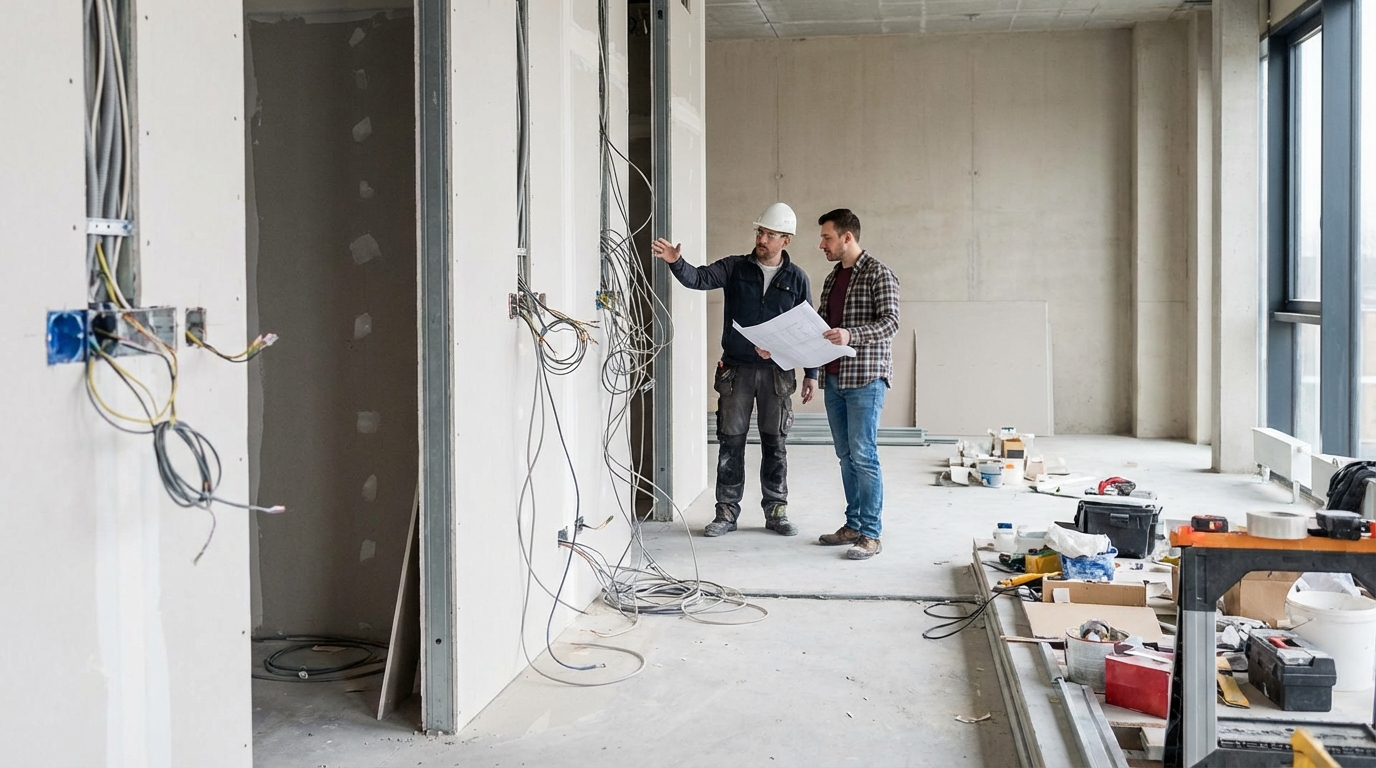
The first invoice after signing usually looks fine. By the third month, the additions start. A dedicated circuit for the server room — that wasn't in the quote. Moisture-resistant gypsum above the pantry — the original spec was standard grade. Proper cable ratings for the number of outlets you actually need — the original quote used thinner, cheaper wiring.
Each change order is a small negotiation where you have zero leverage. The contractor is already on site. Your deadline hasn't moved. You can't bring in someone else to do just the electrical work while the original contractor handles everything else. So you pay the markup.
Firms that have done hundreds of projects know this pattern inside out. The firms that quote properly include these items from the start because they've seen what happens when they don't. The price differences between firms often reflect exactly this — more complete scoping, not higher margins.
Seeing add-on costs pile up on your project? Talk to a firm that prices everything upfront.
The Lowball-and-Disappear Pattern
The worst version of a cheap quote isn't the one with hidden costs. It's the one where the firm takes your deposit, completes 60-70% of the work, and then stops showing up.
This happens more often than people expect. A firm bids 30% below market rate to win the contract. They burn through your deposit on materials and labor. When the money runs out and the remaining work exceeds what they can afford to finish, they go quiet. No formal notice. Just unanswered messages and an empty site.
You're left with a half-finished space that a new contractor will charge a premium to take over — because they're inheriting someone else's work with no documentation of what was done, what materials were used, or what shortcuts were taken. The "savings" from that cheap quote just doubled your total cost.
What a Proper Quote Looks Like
A quote worth comparing isn't just a number. It's a document that tells you exactly what you're getting.
Materials Are Specified
Every line item names the grade, brand, or specification. "18mm MR-grade MDF" instead of just "MDF." "0.55mm commercial-grade vinyl plank" instead of "vinyl flooring." If a material isn't specified, the contractor gets to decide — and they'll decide in their favor.
Scope Is Complete
Electrical works include the number of power points, data points, and dedicated circuits. "Light point" includes the bulb and connector, not just the wiring. MEP coordination is accounted for. Building management compliance is included.
Supply and Install Is Standard
Every item should say "supply and install" — meaning the contractor provides the material and installs it. If a line item says "installation only," find out who's buying the material and at what cost.
Variation Orders Are Defined
A good contract specifies that any change to scope requires a signed variation order before work begins. This protects both sides. If someone asks you to sign something without these protections, that's a red flag.
How to Protect Yourself
You don't need to become a construction expert. You just need to ask the right questions before signing.
Get at least three quotes and compare scope, not price. Line up the proposals side by side. Check that they're quoting the same materials, the same number of electrical points, the same level of finish. If one quote is dramatically cheaper, find out what's missing.
Ask what's excluded. Every proposal has exclusions. The difference is whether they're listed clearly or buried in fine print. Ask directly: "What is NOT included in this price?"
Check the firm's track record on completed projects. Not their portfolio photos — their actual delivery record. Did they finish on time? Did the final cost match the quote? Ask for references and call them. A firm that's done 700+ projects will have plenty of references. A firm offering suspiciously low prices may not.
Use a standardized bill of quantities. This is a document where every item is listed in the same format, so you can compare like-for-like across proposals. It prevents the "five contractors, five different interpretations" problem that makes apples-to-apples comparison impossible.
In Jakarta, a decent commercial fit-out runs about 5-6 million IDR per square meter. Premium spaces cost around 11 million. If a quote comes in well below 5 million for anything beyond a basic functional space, something is being left out. Knowing what questions to ask before you sign makes all the difference.
Need a transparent, fully-scoped interior design quote? Let's talk about your project.